Showing posts with label romance. Show all posts

Friday, January 11, 2019

Commitment and Love

A good marriage requires both love and commitment. Both principle and feeling are needed, and they go well together. In a reaction against the world’s lack of commitment, some Christians are teaching that love IS commitment and are teaching that emotion has no part in love.

Those who emphasize the necessity of commitment in marriage to the exclusion of feelings doubtless do so from pure motives. They look around them and see people basing their decisions on emotions. These people, they observe, know nothing but what feels good. They say, "God wants me happy," and so make decisions based on fleeting feelings that they think will make them happy but which actually make them more miserable.

Good people in our indulgent and feeling-based society have reacted to this detrimental way of thinking. But in their desire to emphasize the need for character and commitment in decision making and relationships -- especially as regards marriage--- some of them deplete love of its emotional element altogether. This may help to counterbalance some people who run entirely on feelings, but it isn't true. It is an overreaction that makes nonsense of the English language and wreaks havoc on common sense.

Sober Christians have known all along that feelings can be either an ally or an enemy. They never should be given the primary focus in decision making (See Feelings). Nonetheless, they still play a role in Christian life---and certainly in marriage. Marriage is primarily a commitment, but no one willingly enters into that commitment without feelings of love. If the feelings fade, the commitment stands, of course. And the feelings--fickle things that the are--may or may not return. For centuries, the feelings properly belonging to marriage have always been called love. But now we are being told that feelings are not a part of love at all.

The teachers of this doctrine imply that if we read I Corinthians 13, we will see clearly that love has nothing whatsoever to do with feelings. They have neglected to consider at least three points:
1. Scripture deals primarily with sin and righteousness, not feelings. Emotion always takes a back seat to doing what is right in the eyes of God. That, however does not mean that feeling is not a major part of love.
2. I Corinthians 13 is not the only passage in the Scriptures on love.
3. I Corinthians 13 tells us what love does. It does not define love or tell us what kind of force it is. It just shows us what that force accomplishes.

I know by experience that love---the feeling of love---works the kind of things that I Corinthians 13 tells us it does. Who has not felt it? When you feel love for someone, it is easy to "think no evil" of them. It comes naturally to be kind and patient, to "bear all things, believe all things, hope all things." On the other hand, ill-will is lynx-eyed. It is difficult not to get puffed up and envious towards someone for whom you have little love. When you don't feel love, it is hard work to show it. (Nonetheless, in many instances we must do so, and we can call upon the love of God to help us.)

In my head I know my children, like everyone, have their faults, but for the most part, in my heart of hearts, I really believe they are pretty nearly perfect. I can't be objective about them. Love gets in the way. Don't most parents feel much the same way about their own children? This isn't a conscious choice, just the outflow of love that cannot be helped.

Even when the evil of wayward children stares them in the face and parents cannot close their eyes to it anymore, they are inclined to blame someone else for it as long as they can. When that fails, they still bear long with their children. They do exactly what I Corinthians 13 tells us they will do if they love them. Do they do this without feeling anything? When his rebellious son died, David cried, "O my son Absalom, my son, my son Absalom! would God I had died for thee, O Absalom, my son, my son!" Love made him cry in agony with an intense and heart-breaking feeling that everyone around him could recognize as love.

If feeling is a part of parental love (and it is), why not marital love? God made us emotional creatures. Marriage is intended by Him as an expression of our best and holiest emotions. The emotional element in love poses no challenge to the need for commitment. People who find themselves in a marriage without the feelings that belong to it certainly have an obligation to maintain their commitment. That goes without question if you believe the Bible. (See Reasons for Divorce)  The Scriptures make it plain that there is no such thing as an honorable divorce. In every divorce there is at least one guilty party, if not two. Marriage, like motherhood, is a lifelong commitment. You don't get out of it, even if you got into it by mistake. Whether you lost your first love or you never had any in the first place because you believed the doctrine that love is not a feeling, once the commitment is made, it is sealed.

Though we believe that marriage is a commitment, can't we also believe that there is an emotion called love? To take all the feeling out of love robs humanity of its noblest emotions and makes a robotical existence the ideal. This isn't the intention, I'm sure, but if you say "love has nothing whatsoever to do with emotions," look closely at the words and consider their ramifications. In an attempt to pull people out of the muddy and polluting waters of one ditch, you are using a rope that will land them in the dry abyss of a mechanical existence on the other side---an existence that is very difficult to maintain and is likely to drive people to jumping back into the murky slop you tried to get them out of. A healthy and scriptural understanding of love and commitment will not do that. The high ground has both. And where natural affection is not sufficient to maintain the supply of either one, the Lord Jesus provides a well of living water. He has an infinite supply of love from which anyone can draw who calls upon His name.

Let us "Prove all things; hold fast that which is good." (I Thessalonians 5:21.) 

Photo by Naassom Azevedo on Unsplash

Saturday, January 7, 2017

Courtship

The following extracts from the autobiography of Dan Smith gives us an historical glimpse of what Christian courtship was like prior to World War II:

A broken romance nearly shattered me. Edith was the wholesome and most beautiful daughter of a Methodist minister, the Rev. George Growcott. . . .
Mr. Growcott's rules concerning his daughter were very strict. The door closed on me at 9:30 p.m. sharp. Only once did I fail to deliver the goods and that when Edith slipped and sprained her ankle. But I was really no romantic with the girls. I was so reserved that it took me many a day before I summoned up courage to kiss her. That was quite an accomplishment because, up to that point of time, I could not remember ever having kissed my mother. I did so later - once - when I left home for China. We Scottish are so undemonstrative, however, that it was a kind of embarrassment both to mother and me.

My romance suddenly came to an end. I was always preaching and Edith was always waiting. One Saturday night  with three appointments on the Sunday, we were walking in the country and, feeling that I was not paying her due attention, Edith stopped, thinking to jolt me to an awareness of her presence. But I was so immersed in thought for messages that I walked three miles to Leven village before realizing she was not with me. That did it! She went off to London to train as a nurse and found a more attentive suitor, But the loss of Edith hurt, and I determined never to have another love.
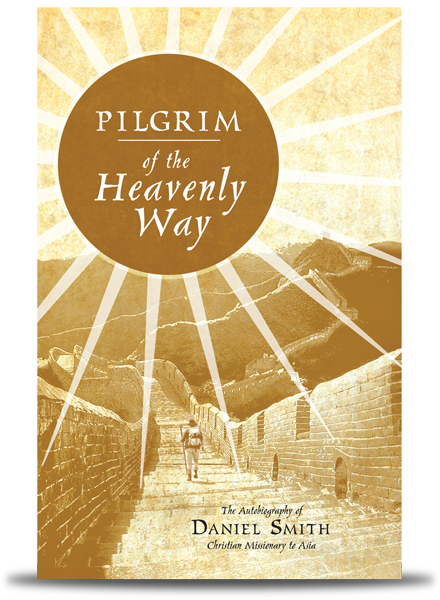
~ "Pilgrim of the Heavenly Way" Daniel Smith pp.41-42

Poor Dan would have done well to have had a chaperone like many proponents of modern courtship doctrines require. Perhaps the chaperone would have brought his attention to the fact that he had neglected his girl. No harm, however, since Dan was later married in a fashion which some proponents of the courtship doctrines may applaud. Knowing nothing but her name and the fact that she was a missionary on the opposite side of his disctrict in China, he became convinced that Catherine would be his wife. Three days after meeting her, he proposed. They would have been married immediately, but the China Inland Mission (with whom they both worked) recommended that he take the vacation the mission had planned for him before marrying. Three days and a thirty-one page letter that he wrote while on vacation were the extent of the courtship. With the vacation just taken, there was no time for a honeymoon. Thus, the two married barely knowing one another. Despite forty years of faithful service together in the Lord's work, I dare say very few even of the most hardy adherents of "courtship" would recommend closely following this example. The biography, however, is well worth reading, spiritual in content and full of interesting stories. His faith, worthy of following.
 
Pilgrim front cover

Saturday, December 10, 2016

Feelings

There is a beautiful, heartwarming story going around Facebook about a woman who asked her husband to carry her down the stairs every day for a month before she would consent to a divorce. The man agreed, and in the process of spending these few minutes a day with his wife, he discovered a renewed love for her. It is a moving story, and if true, it is the story of a very wise woman who had an almost super-human ability to control her passions. Nonetheless, the story, when considered closely, in efffect supports the false idea that romantic feelings are necessary for a couple to stay married. What if the husband had found carrying his wife to be a daily chore uneased by the feelings of love that lighten every burden? Would he then have been justified in carrying out his plan for divorce?

Emotions are given too high a priority in almost every sphere of modern life. I have nothing agaist emotions, and I think past generations have sometimes given them less emphasis than they deserve. God intends us to have feelings and to enjoy them, and they most certainly have their place. Nonetheless, feelings should never be allowed to become our rule of faith and practice. Our feelings should be consulted and heavily weighed when we are deciding whom to marry (a matter which God has left open to our own choice), but they should not be consulted at all when we are determining whether or not to stay married. On that subject God has spoken, and His Word alone should be consulted.


Saturday, November 8, 2014

Deciding to Love

Love and commitment are not the same thing.  In order for marriage to be what it ought to be, you need both. Commitment is based on a decision.  Love is much more complicated.
There are different kinds of love.  Some of them are more a matter of choice than others.  As Christians we choose to love good and hate evil — even if our affections are screaming the opposite. There are many times when you have to choose to love someone when your feelings do not incline you to do so.  Sometimes it happens that a man must choose to love his wife, though he doesn’t really feel like it.  If he is in this unfortunate situation, he ought by all means to choose to do right regardless of his feelings.  Perhaps he has to choose to forsake his mistress and love his wife.  It is right for him to do so, and it may be real love for his wife and kids that would induce him to do it — but it isn’t romance.
 You can choose to love your neighbor, to esteem another better than yourself, and to lay down your life for your wife.  These are love, but romance or “falling in love” is different.  You don’t decide to fall.  You just do.  You might decide to get close enough to fall — or decide not to — but falling in love is not a decision.
A man doesn't have to fall in love with a woman to marry her — but it is hard enough for him to obey Ephesians 5 even when he does.  Why make it harder? A woman doesn't want to hear, “I choose to love you.” What she wants to hear is, “I can’t help loving you.” Read the Song of Solomon and see if there is any deciding to love in there.
Anyone can choose to eat sauerkraut, but most folks can’t choose to love it as much as they do pizza.  You can decide what you do.  You can not decide what will thrill your heart.  You can choose to marry, and in a sense choose to love your wife.  You can also choose to take steps that will increase your enjoyment in every circumstance in life.  You can make choices that affect how you feel — but you can not directly choose your feelings.
      Romance is predominately feeling.  If you can decide it, you take the passion out of it, and it isn’t romance any more.  You could marry without it.  But why would you want to?  You may still have love if you did — the kind of love that can be decided, but that is a bare sort of love that should be reserved for those who have no hope of anything better. 


Saturday, November 1, 2014

The Choice to Love

One of the biggest tricks of the devil is to differentiate between things that are the same and to equate things that are different. The saying Love is a Choice is open to such confusion. There is a sense in which it is true, and another in which it is not, and it is extremely important not to confuse the two.

The young person who is looking for a spouse and thinks he can choose to love any one who is convenient and available is a blatant fool, but the married person who doesn't choose to love his spouse is downright wicked. The things are entirely different. Single people should wait til they fall in love to marry. This will make the business of choosing to love your spouse a pleasure and give you a head start in performing all the duties of married life.


The man or woman who is already married has no business falling at all. You have already made your choice. Hopefully it was a suitable choice and you fell in love with the person you married, but regardless of the past, it is now your business to put up whatever walls are needed to keep from falling any which direction. You have to choose to love the one you have chosen.


If a married man or woman falls inwardly, you still have a moral obligation to choose to love your spouse. You may find that you do not have the power to choose to love in the same way and to the same degree as someone who unintentionally falls in love. Love is like that. Emotions are like that. People are like that. We can't always choose what we feel. But we can choose what we do, and a married person has an obligation to be faithful to his family no matter what he feels. This is love. It is not the wild, emotional kind of love that makes falling in love fun. It is the sober, faithful kind of love, that makes being married safe. It includes the commitment not only to give the bare outward duties of love but to nourish every proper emotion and to starve everything that goes against it. In this sense love is a choice.


Young people starting out and planning to marry ought to have this kind of commitment, but you don't want that to be all you have. You want your marriage to start with all the warmth of emotion that makes the journey of life delightful. A person can't choose to feel that with just anyone. Love of this kind is something that happens to you. It isn't chosen. It can be nourished or starved depending on the requirements of the circumstances, but it cannot be forced.